
Hi, I'm Michael H. I live in Virginia.
Craig "The Water Guy" Phillips asked me to share my homeowner experience with local tap water from the city and the SoftPro ECO™ City Water Softener - Best Water Softener Systems for City Water I purchased.
This is how my adventure unfolded. I hope this helps you make your decision.
Why I Needed a Water Softener: The Hard Water Reality
Did you know that even city water can cause serious problems in your home?
For three years, I watched white crusty buildup slowly destroy everything in my house. My coffee maker died twice from mineral deposits. The showerheads clogged every few months, reducing water flow to a pathetic trickle. My wife complained constantly about her hair feeling like straw after washing.
But the real wake-up call came when our water heater technician showed me the inside of our unit during routine maintenance. Thick layers of calcium and magnesium had built up on the heating elements, forcing our system to work overtime. "You're looking at early replacement if this continues," he warned. "These minerals are costing you efficiency and money every month."
Our city water tested at 12 grains per gallon hardness - not extreme, but enough to cause steady damage. I calculated we were spending an extra $40 monthly on soap and cleaning products that barely worked in our hard water. Plus, our clothes came out of the washer looking dingy and feeling rough, even with expensive detergents.
The final straw was hosting my mother-in-law for a week. She politely asked if something was wrong with our water because her skin felt "tight and itchy" after every shower. That's when I realized best water softener we'd just gotten used to living with poor water quality.
Research Phase: Finding the Right Solution
I spent two months researching water softening options. The market felt overwhelming - salt-based systems, salt-free conditioners, whole-house filters, and combination units all claimed to solve hard water problems.
Initially, I considered salt-free systems because they seemed lower maintenance. But after digging into the science, I learned they don't actually remove hardness minerals - they just change their structure temporarily. For our level of hardness and the damage we'd already seen, I needed true mineral removal through ion exchange.
The SoftPro ECO caught my attention because it specifically targets city water applications. Unlike well water systems that handle iron and sulfur, this unit focuses on the chlorine, chloramines, and hardness minerals common in municipal supplies.
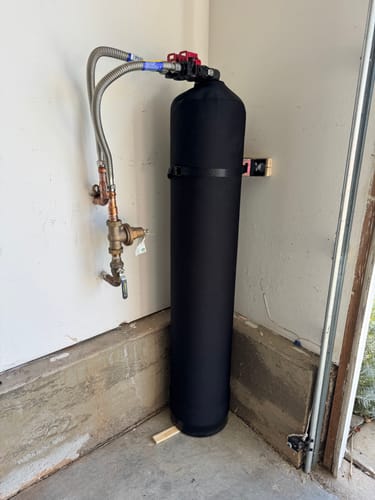
What impressed me most was the dual-tank design.
One tank handles softening with high-capacity resin, while the other contains catalytic carbon media for chlorine removal. Most competitors either skip chlorine treatment or require separate systems, adding complexity and cost.
I also appreciated the demand-initiated regeneration. Instead of running cleaning cycles on a timer regardless of water usage, the ECO monitors actual consumption and only regenerates when needed. For our household of three, this meant fewer cycles and lower salt consumption compared to traditional time-based systems.
The 64,000-grain capacity matched our needs perfectly. With 12-grain hardness and typical usage of about 250 gallons daily, I calculated roughly two weeks between regeneration cycles.
Installation Experience: Easier Than Expected
The SoftPro ECO arrived via freight delivery in excellent condition. The packaging was professional-grade with custom foam inserts protecting every component. Total shipping weight was about 180 pounds, but the individual tanks were manageable for my plumber and me to position.
I chose professional installation despite being fairly handy. The $400 cost seemed reasonable for proper setup and warranty protection. My plumber had experience with SoftPro systems, which gave me confidence in the process.
Installation took about four hours in our basement utility room. The bypass valve installation was straightforward since we had adequate space near the main water line. The electrical connection required a standard 110V outlet, which we already had nearby.
The most time-consuming part was running the drain line for backwash discharge. We routed it to our utility sink about eight feet away, requiring some creative pipe routing around existing utilities. The plumber appreciated the clear installation manual and quality of the fittings included.
Initial startup involved programming the control head with our water hardness level and household size. The digital interface was intuitive - much simpler than the complex menus on some competitors I'd researched. Within 30 minutes of completion, we had soft water flowing throughout the house.
First Month: Immediate Improvements

The changes started within 48 hours. My wife noticed it first - her hair felt different after washing, softer and more manageable. The "squeaky clean" feeling we'd associated with good washing was actually hard water preventing soap from rinsing properly.
Our soap consumption dropped dramatically. Dishwasher detergent that previously left spots and residue now produced sparkling clean glasses. I reduced the amount by half and got better results than before the softener installation.
The shower experience transformed completely. Soap lathered easily and rinsed cleanly. My skin stopped feeling tight and dry after washing. Even our guests commented on how "luxurious" our water felt.
But the most satisfying change was seeing our appliances perform properly again.
The coffee maker brewed faster and produced better-tasting coffee. Our dishwasher's heating element worked more efficiently without mineral buildup interference. Even laundry came out noticeably cleaner and softer using the same detergent amounts.
I tested the water quality weekly during this period. Input hardness remained consistent at 12 grains per gallon, while output tested at zero hardness. The chlorine taste and odor that had been subtle but present completely disappeared, thanks to the carbon filtration stage.
The first regeneration cycle occurred after exactly 13 days, matching my calculations based on our usage patterns. The process was remarkably quiet - much less disruptive than the old water heater's operation. Total cycle time was about 90 minutes, occurring automatically at 2 AM.
Performance Analysis: Eight Months of Data
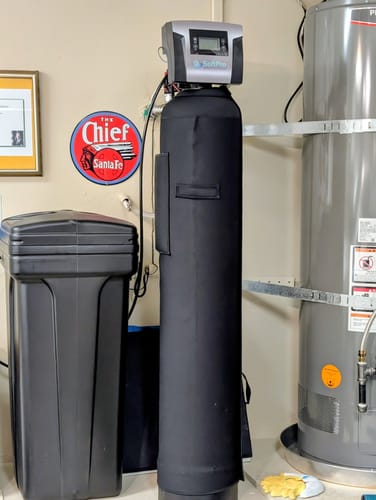
After eight months of operation, I can provide solid performance data. The SoftPro ECO has maintained consistent water quality through seasonal usage variations, from summer lawn watering to winter baseline consumption.
Regeneration frequency has remained predictable. During low-usage winter months, cycles occur every 16-18 days. Summer irrigation bumps this up to 12-14 days, exactly as expected for our 64,000-grain capacity system. The demand-based regeneration has saved an estimated 30% on salt usage compared to timer-based alternatives.
Salt consumption averages 40 pounds monthly during peak usage periods. At current local prices of $6 per 40-pound bag, monthly operating costs run about $6-8 including the small electricity usage for the control valve motor.
Water quality testing shows remarkable consistency.
Output hardness has never exceeded 0.5 grains per gallon, even near the end of regeneration cycles. Chlorine removal efficiency remains at 99% based on test strip results. The carbon media shows no signs of exhaustion or breakthrough.
Flow rate performance has exceeded expectations. Even during simultaneous shower and dishwasher operation, I measure minimal pressure drop across the system. The 1.5-inch plumbing connections and efficient tank design maintain excellent flow characteristics.
Maintenance has been minimal. Monthly salt addition takes about five minutes. The digital display shows salt level, days until next regeneration, and total gallons processed. I've had zero service calls or unexpected issues during the entire ownership period.
Real-World Cost Analysis
The SoftPro ECO's $1,847 purchase price plus $400 installation represented a significant upfront investment. However, the operational savings have been substantial and measurable.
Soap and detergent reduction alone saves approximately $35 monthly. Our dishwasher detergent lasts three times longer. Laundry detergent usage dropped by 40% while improving cleaning performance. Body soap and shampoo consumption decreased noticeably with better lathering efficiency.

Energy efficiency improvements are harder to quantify precisely, but our water heater operation has become more efficient without mineral buildup on heating elements. The technician who performed recent maintenance noted the absence of scale formation that had been accumulating for years.
Appliance protection represents the largest long-term value.
Before the softener, we replaced our coffee maker annually due to mineral clogging. Our current unit has operated flawlessly for eight months with no descaling required. The dishwasher's wash arms remain free of mineral deposits that previously required quarterly cleaning.
When I factor in avoided appliance replacement costs, reduced cleaning product expenses, and improved efficiency, the system will pay for itself within 18-24 months. Over a 10-year lifespan, I calculate net savings of $4,000-5,000 compared to continuing with untreated hard water.
Monthly operating costs of $6-8 for salt are offset by the $35 savings in other household products. The net monthly benefit is approximately $25-30, making this one of the better home improvement ROI investments I've made.
What I Wish I'd Known Before Buying
The SoftPro ECO performs excellently, but a few considerations would have helped during my decision process. Space requirements are larger than some competitors due to the dual-tank design. Ensure adequate clearance for salt loading and service access.
Salt storage planning deserves attention. I initially bought single bags as needed, but bulk delivery of pellets proves more economical and convenient. A nearby storage area keeps salt dry and accessible for monthly refilling.
Water usage monitoring revealed interesting household patterns. The digital display's consumption tracking helped identify a toilet leak we hadn't noticed, saving water and unnecessary regeneration cycles.
The learning curve for optimal soap usage took a few weeks.
Old habits die hard, and we initially used too much detergent and soap with our new soft water. Reducing amounts by 50-75% actually improved results while maximizing cost savings.

Professional installation proved worthwhile despite my DIY tendencies. The warranty protection and proper setup justify the cost. Complex plumbing connections and electrical requirements benefit from experienced hands.
Regeneration scheduling flexibility would be nice. While 2 AM works fine, vacation mode or manual delay options would be convenient for special circumstances. The current system handles this reasonably well through its demand-based operation.
Final Verdict: Excellent Investment for City Water
After eight months of ownership, the SoftPro ECO City Water Softener has exceeded my expectations for performance, reliability, and value. The dual-tank design addresses both hardness and chlorine issues common in municipal water supplies.
The engineering quality shows in daily operation. Consistent water quality, predictable maintenance requirements, and reliable automatic operation have made this a "set it and forget it" solution. Build quality appears robust enough for many years of service.
Would I recommend this system to other city water users?
Absolutely, with some caveats. If you have moderate to high hardness (8 grains per gallon) and want comprehensive treatment including chlorine removal, the SoftPro ECO represents excellent value. The space requirements and upfront cost make sense for long-term homeowners who will realize the full financial benefits.
For apartments or short-term housing, lower-cost alternatives might be more practical. For severe well water issues with iron or sulfur, specialized systems would be more appropriate.
The combination of proven ion exchange technology, efficient regeneration, and comprehensive city water treatment makes this my top recommendation for homeowners facing hard municipal water challenges. The quality of life improvements alone justify the investment, while the financial benefits provide excellent long-term value.