
Hi, I'm Zeke Mills. I live in California. Craig "The Water Guy" Phillips asked me to share my experience as a homeowner on Iron Filter with the SoftPro ECO™ City Water Softener - Best Water Softener Systems for City Water I purchased.
This is how my adventures played out. I hope this helps you in your decision.
Eight months ago, I was dealing with what I thought was just "typical" city water issues. My dishes came out of the dishwasher with white spots, my shower doors were constantly cloudy, and I was going through soap like it was going out of style. I figured this was just part of living with municipal water—until my neighbor mentioned how much better her water tasted and felt after installing a water softener.
That conversation sparked a months-long research journey that ultimately led me to the SoftPro ECO City Water Softener. What I discovered wasn't just a product that solved my immediate problems, but a system that completely transformed how water functions in my home.
If you're dealing with hard water issues from your city supply, wondering whether a water softener is worth the investment, or specifically considering the SoftPro ECO system, this detailed account of my real-world experience will give you the honest insights you need to make an informed decision.
The Hard Water Problem That Started It All
Living in California, I knew our water was hard—the telltale signs were everywhere. My coffee maker required descaling every few weeks, white crusty buildup appeared around faucets faster than I could clean it, and my skin felt tight and dry after every shower. But I hadn't realized just how hard until I actually tested it.
Using a simple test kit from the hardware store, I discovered my municipal water was registering 18 grains per gallon of hardness. To put that in perspective, anything over 7 grains per gallon is considered "very hard," so I was dealing with extremely hard water that was wreaking havoc throughout my home.
The calcium and magnesium minerals responsible for water hardness were causing more problems than just cosmetic issues. My water heater was working overtime, my appliances were showing premature wear, and I was spending a fortune on specialty cleaning products to combat mineral buildup. Even worse, my clothes were coming out of the wash feeling stiff and looking dingy despite using quality detergents.
The financial impact was becoming clear when my plumber pointed out mineral scale buildup in my pipes during a routine service call.
He estimated that without addressing the hard water, I'd be looking at premature replacement of my water heater and potentially costly pipe repairs within a few years.
That's when I realized this wasn't just about convenience or aesthetics—hard water was literally costing me money every month through increased energy bills, excessive cleaning product usage, and accelerated wear on expensive appliances and plumbing systems.
Research Journey: Finding the Right Solution
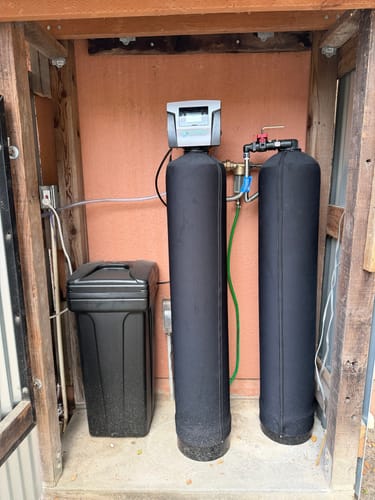
My research started with understanding the difference between various water treatment approaches. I learned that traditional salt-based ion exchange systems were the most effective for true hardness removal, while salt-free systems were actually water conditioners that didn't remove minerals but changed their structure.
Since I specifically needed hardness removal—not just conditioning—I focused on traditional softening systems. The key factors I prioritized were efficiency (to minimize salt and water usage), capacity (to handle my household's water consumption), and reliability for long-term operation.
I spent weeks comparing systems from different manufacturers, reading technical specifications, and trying to understand features like upflow regeneration, precision brining, and smart control systems.
The terminology was overwhelming at first, but I gradually learned how these features translated to real-world benefits.
The SoftPro ECO caught my attention because of its focus on efficiency and environmental responsibility. Unlike older softener designs that regenerate on a timer regardless of actual water usage, the ECO uses demand-initiated regeneration based on actual water consumption and hardness levels.
What really sold me was learning about the upflow regeneration process. Traditional downflow systems push brine through the resin bed in the same direction as service flow, which is less efficient and wastes salt and water. The ECO's upflow design pushes brine up through the resin bed, creating better contact and requiring less salt per regeneration cycle.
The size was another crucial factor. With limited space in my garage, I needed a system that wouldn't overwhelm the area while still providing adequate capacity for my three-person household with our typical water usage patterns.
Unboxing and First Impressions
The SoftPro ECO arrived via freight delivery, which I appreciated since the unit weighs about 180 pounds when fully assembled. The packaging was professional-grade with plenty of protective foam, and everything arrived in perfect condition.
My first impression was how compact the system was compared to older softeners I'd seen. The single-tank design with the control head integrated on top created a much cleaner profile than traditional two-tank systems. The fiberglass tank felt solid and well-constructed, with a smooth finish that looked like it would hold up well in a garage environment.
The control panel was more sophisticated than I expected, with a digital display showing various operational parameters.
Instead of simple mechanical timers, this system clearly used advanced programming to optimize performance.
All the necessary components were included: bypass valve assembly, drain line fittings, and a comprehensive installation manual. The manual was particularly impressive—clearly written with detailed diagrams that made the installation process seem manageable for someone with basic plumbing skills.
One detail that impressed me was the quality of the bypass valve. Many cheaper systems include flimsy plastic valves, but the ECO came with a robust brass bypass valve that felt like it would last for decades. These small touches suggested attention to long-term reliability rather than cutting corners on components.
Installation Experience and Setup Process

I decided to tackle the installation myself, having done basic plumbing work before. The process took most of a Saturday, but that included taking my time to understand each step and making sure everything was done correctly.
The most challenging part was cutting into my main water line to install the bypass valve assembly. I shut off water to the house, drained the lines, and carefully measured twice before cutting. The compression fittings provided made the connections straightforward, though I did need to make a trip to the hardware store for pipe joint compound.
Positioning the unit was easier than expected thanks to the compact design.
I placed it near my water heater where I had access to a drain for the backwash line and a standard electrical outlet for power.
The drain line installation required running a half-inch tube to my floor drain, with a specific air gap requirement to prevent backflow. The manual was very clear about local plumbing codes, though I verified requirements with my city's building department.
Programming the control head was surprisingly intuitive. I entered my water hardness level (18 grains per gallon), household size, and iron content (minimal in city water). The system automatically calculated optimal regeneration settings, though I could adjust them manually if needed.
The initial startup process involved filling the brine tank with salt, running the first regeneration cycle manually, and testing the system operation. Within about four hours of starting installation, I had softened water flowing throughout my house.
The first thing I noticed was how different the water felt—slippery in a good way, indicating the hardness minerals were being effectively removed.
Performance Analysis: Real-World Results
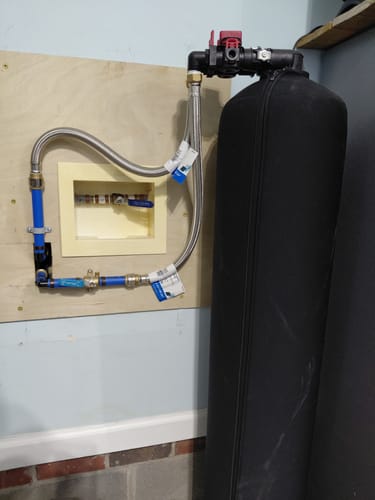
Testing the water quality before and after installation provided concrete evidence of the system's effectiveness. Using both test strips and a digital TDS meter, I could quantify the improvements rather than relying on subjective impressions.
Pre-installation hardness of 18 grains per gallon dropped to less than 1 grain per gallon post-installation. The total dissolved solids (TDS) reading decreased from 425 ppm to 280 ppm, indicating significant mineral removal while maintaining other beneficial dissolved substances.
What impressed me most was the consistency of these results over time.
Even during periods of high water usage, the quality remained stable, suggesting the system's capacity was well-matched to my household's needs.
The iron content in my city water was minimal to begin with (0.3 ppm), but even that trace amount was eliminated. This was evident in the complete absence of any rust staining in sinks or toilets—something I'd dealt with occasionally before.
Flow rate performance exceeded my expectations. I was concerned that adding a softener might reduce water pressure, but I measured virtually no difference at fixtures throughout the house. The system's design maintains excellent flow characteristics even during peak demand periods.
Regeneration cycles occur approximately every 5-7 days based on actual water usage, consuming about 8 pounds of salt and 50 gallons of water per cycle. These numbers align closely with the manufacturer's efficiency claims and represent significant improvements over older softener designs.
The control system's monitoring capabilities proved invaluable for understanding usage patterns. I can see historical data on water consumption, salt efficiency, and system performance, which helps with maintenance planning and troubleshooting if issues arise.
Daily Living Impact and Household Benefits
The transformation in daily water experiences was immediate and comprehensive. Within the first week, my family noticed significant improvements across multiple aspects of household water use.

Dish washing became dramatically more effective. Soap and detergent created rich lather Discover more with much smaller amounts, and dishes emerged spotless from both hand washing and the dishwasher. The chronic white spots and film on glassware completely disappeared, and my stainless steel sink maintained its shine with minimal effort.
Personal care improvements were equally noticeable.
My skin felt softer and less tight after showers, and my hair became more manageable with less shampoo required. Family members commented on how much better their skin felt, particularly during California's dry seasons when hard water typically exacerbates dryness issues.
Laundry results improved substantially. Clothes emerged from the wash feeling softer and looking brighter, with colors appearing more vivid. I reduced fabric softener usage by half while achieving better results than before. White items stayed whiter longer, and the overall lifespan of clothing appeared to be extending.
Cleaning throughout the house became significantly easier. Bathroom fixtures stayed cleaner longer, requiring less frequent deep cleaning to remove mineral deposits. My shower doors, previously cloudy despite regular cleaning, became crystal clear and stayed that way with simple weekly maintenance.
The coffee maker and other appliances showed immediate improvements. My morning coffee tasted noticeably better—less bitter and with cleaner flavor profiles. Small appliances that use water required descaling much less frequently, and my steam iron stopped leaving mineral stains on clothing.
Unexpected benefits emerged over time, including reduced soap scum in the shower and longer periods between cleaning cycles for the dishwasher's rinse aid dispenser.
Operating Costs and Long-Term Economics
Tracking actual operating costs provided valuable insights into the system's economic impact. The primary ongoing expenses are salt and occasional maintenance, with some additional water and electricity usage during regeneration cycles.
Salt consumption averages about 35-40 pounds per month for my household, costing approximately $6-8 depending on salt prices and type. I use high-purity solar salt pellets, which cost slightly more than rock salt but provide better system performance and longer resin life.
Electricity usage is minimal since the control system only operates during regeneration cycles and for monitoring. The impact on my electric bill is negligible—probably less than $2 per month.
Water usage during regeneration adds roughly 200 gallons per month to my consumption.
At local water rates, this represents about $4-5 in additional costs monthly.
Total monthly operating costs run approximately $12-15, which is significantly offset by savings in other areas. I use about 60% less dish soap, laundry detergent, and cleaning products. My water heater operates more efficiently without mineral scale buildup, reducing energy consumption.
The most significant long-term economic benefit is protecting expensive appliances and plumbing systems. My water heater should last years longer without hard water scale, and I've avoided the need for harsh descaling chemicals that can damage appliance components.
Calculating return on investment, the system should pay for itself within 3-4 years through reduced cleaning product costs, energy savings, and extended appliance life. Beyond that timeframe, it continues generating net savings while providing improved water quality throughout the house.
Honest Assessment: Limitations and Considerations
After eight months of ownership, I've encountered some minor limitations and considerations that potential buyers should understand. While my overall experience has been excellent, no system is perfect for every situation.
The regeneration process, while efficient, does produce some noise during the backwash and rinse cycles. It typically runs late at night when programmed for off-peak hours, but light sleepers might notice the sounds if the unit is installed near bedrooms. The noise isn't excessive, but it's noticeable during quiet periods.
Salt management requires ongoing attention. The 150-pound brine tank capacity means refilling every 3-4 months, but timing this properly is important for continuous operation. I learned to monitor salt levels more carefully after running low once, which temporarily affected performance.
The system requires adequate drainage for backwash water, which can be challenging in some installation locations.
The drain line must maintain proper slope and termination, which limited my placement options slightly.
Initial water testing and system programming require some technical understanding. While the manual is comprehensive, homeowners uncomfortable with water chemistry concepts might benefit from professional setup to optimize performance.
Space requirements, though compact for a softener, still demand adequate clearance for service access. I needed to leave room around the unit for salt refilling and potential maintenance, which affected my garage organization.
The digital control system, while sophisticated, represents a potential point of failure compared to simple mechanical timers. However, the manufacturer provides excellent technical support, and the programming backup features minimize concerns about losing settings.
For households with very low water usage, the system's capacity might be oversized, potentially leading to longer periods between regenerations that could affect efficiency.