
Hello there! I'm Andrew N. from Michigan, and I wanted to share my real-world experience with you about city tap water and the SoftPro ECO™ City Water Softener - Best Water Softener Systems for City Water that I purchased several months ago. Craig "The Water Guy" Phillips encouraged me to document my homeowner journey, so here's exactly how everything unfolded. I genuinely hope my experience helps guide your decision-making process.
The Problem That Finally Made Me Act
Did you know that hard water can completely transform your daily routines in ways you never expected?
I discovered this the hard way when I realized I was cleaning my shower mirror with vinegar every single week, scrubbing away stubborn mineral deposits that seemed to appear overnight.

Living in Michigan, our municipal water supply carries significant mineral content - primarily calcium and magnesium compounds that municipal treatment plants don't remove since they're not considered harmful contaminants. However, these dissolved minerals create what we call "hardness," typically measured in grains per gallon (gpg) or parts per million (ppm).
My specific situation involved a small shower mirror that I use for shaving. Every week, without fail, I'd notice a cloudy, chalky film building up across the surface. This wasn't just soap scum - it was hard water mineral deposits that required white vinegar and serious scrubbing to remove.
The mineral buildup wasn't limited to my mirror. I noticed similar white spots on glassware, reduced soap lather throughout the house, and my coffee maker required descaling far more frequently than the manufacturer recommended. My water heater seemed to work harder, utility bills crept upward, and even my skin felt different after showers.
Before investing in a water softener, I tried several temporary solutions. I experimented with different cleaning products, switched to distilled water for certain appliances, and even considered replacing fixtures I thought were simply wearing out. None of these approaches addressed the root cause: the dissolved minerals in our city water supply.
Research Phase: Understanding Water Softening Technology
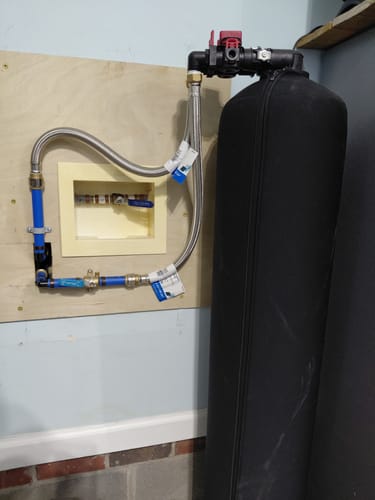
My journey into water treatment technology started with understanding exactly what causes hard water and how different systems address the problem. Municipal water treatment focuses primarily on disinfection and removing harmful contaminants, not necessarily optimizing water for household use.
I learned that ion exchange technology represents the gold standard for hard water treatment. This process utilizes specialized resin beads that attract calcium and magnesium ions, exchanging them for sodium ions. The resin bed requires periodic regeneration with salt brine to restore its capacity.
During my research, I evaluated several different approaches. Salt-free conditioners use template assisted crystallization (TAC) technology, which changes the structure of minerals without removing them. Reverse osmosis systems remove minerals entirely but typically serve point-of-use applications rather than whole-house treatment.
Capacity calculations became crucial in my decision-making process. I needed to determine my household's water usage patterns, the hardness level of our municipal supply, and how frequently I wanted regeneration cycles to occur. The SoftPro ECO system offered multiple capacity options with high-efficiency resin that maximizes treatment between regenerations.
Certification standards helped narrow my choices significantly. I prioritized systems tested to NSF/ANSI Standard 44 for performance verification and NSF/ANSI Standard 61 for health effects. Third-party validation from the Water Quality Association (WQA) provided additional confidence in performance claims.
The SoftPro ECO distinguished itself through its demand-initiated regeneration technology, which monitors actual water usage rather than operating on fixed time schedules. This efficiency feature reduces salt consumption, minimizes water waste, and ensures consistently soft water.
Unboxing and Initial Setup Experience
The SoftPro ECO arrived in sturdy packaging with excellent protection for all components. Upon unpacking, I immediately noticed the substantial build quality - the control valve felt solid, the mineral tank appeared robust, and all fittings looked professional-grade.
The system includes a mineral tank containing the ion exchange resin, a separate brine tank for salt storage, a programmable control head, and all necessary connecting hardware. The documentation package contained clear installation diagrams, programming instructions, and maintenance guidelines.
Physical dimensions aligned perfectly with my utility room space. The mineral tank measures approximately 10 inches in diameter, allowing placement in tight areas, while the separate brine tank provides ample salt storage capacity to minimize refill frequency.

I appreciated the quality of included components - brass fittings, durable bypass valve, and professional-grade tubing. Everything appeared designed for long-term reliability rather than cost-cutting measures I've seen with some competitive products.
The control head featured an easy-to-read LCD display with intuitive programming options. Initial setup required inputting local water hardness level, household size, and preferred regeneration timing - softprowatersystems.com all straightforward parameters with clear explanations in the manual.
Installation Process and First Operation

I opted for professional installation given the plumbing modifications required for whole-house treatment. My plumber needed approximately four hours to complete the installation, including cutting into the main water line, installing the bypass system, and connecting drain lines.
The installation location required access to electrical power, a floor drain for regeneration discharge, and adequate clearance for salt loading. My utility room provided ideal conditions, though the system could accommodate various installation scenarios.
Initial programming involved setting water hardness at 18 grains per gallon based on my municipal water report, household size of four people, and preferred regeneration timing during low-usage hours. The demand-initiated system calculates optimal regeneration frequency based on actual consumption patterns.
First operation included an initial regeneration cycle to prepare the resin bed for service. This process took approximately 90 minutes, cycling through backwash, brine draw, slow rinse, and fast rinse sequences. The system operated quietly with minimal noise even during regeneration.
I tested the installation immediately using a basic hardness test strip. Incoming water measured 18 grains per gallon while treated water showed zero detectable hardness - exactly the performance expected from properly functioning ion exchange technology.
The bypass valve allowed easy comparison between treated and untreated water, confirming the dramatic difference in soap lathering, water feel, and mineral content. Even without sophisticated testing equipment, the improvement was immediately obvious.
Six-Month Performance Analysis and Real Results
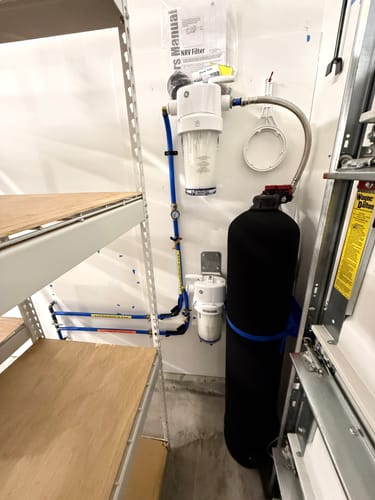
The most dramatic change occurred within days of installation. My shower mirror, which previously required weekly vinegar cleaning, now stays completely clear. Six months later, I haven't cleaned it once with vinegar - just occasional wiping with a regular towel.
I conducted water testing at multiple intervals using both test strips and a digital TDS meter. Consistently, the treated water measures zero hardness while maintaining appropriate mineral balance for taste. The ion exchange process specifically targets calcium and magnesium without over-processing the water.
Soap performance improved dramatically throughout the house. Dishwasher detergent consumption decreased by approximately 30%, laundry detergent works more effectively, and shower soap creates rich lather with minimal product. These efficiency gains translate to measurable cost savings over time.
My coffee maker hasn't required descaling since installation, compared to monthly maintenance previously. The heating element operates more efficiently without mineral buildup, and coffee taste improved noticeably due to consistent water quality.
Appliance protection represents a significant long-term benefit. My water heater operates more efficiently without scale accumulation on heating elements. The dishwasher shows no mineral spots on dishes, and even small appliances like the steam iron function better with soft water.
Regeneration occurs approximately every eight days based on our family's usage patterns. Each cycle consumes roughly 40 pounds of salt and 50 gallons of water - well within expected parameters for a family of four with moderately hard water.
Skin and hair improvements surprised me initially, though research confirms these benefits. Soap residue rinses away completely with soft water, leaving skin feeling less dry and hair more manageable. Family members noticed these changes independently.
Operational Costs and Maintenance Reality
Salt consumption averages 40-50 pounds monthly, costing approximately $8-10 depending on salt type purchased. I use standard solar salt pellets, though potassium chloride offers a sodium-free alternative at higher cost.
Electricity consumption remains minimal - the control head draws power only for valve operation and display functions. Annual electrical costs likely add less than $15 to utility bills, making operational efficiency excellent.
Water usage during regeneration totals approximately 50 gallons per cycle. With regeneration occurring every 8-10 days, monthly water consumption for system operation equals roughly 150-180 gallons. Given the efficiency improvements in other applications, net water usage may actually decrease.
Maintenance requirements stay remarkably simple. Monthly salt level checks take seconds, and the large brine tank requires refilling roughly every two months. I haven't needed any service calls or component replacements during six months of operation.
The resin bed should maintain effectiveness for 10-15 years with proper operation. Annual system sanitization represents the only significant maintenance task, involving specialized resin cleaner to maintain optimal performance.
Compared to purchasing bottled water, using more cleaning products, and dealing with appliance damage from hard water, the operational costs represent excellent value. Monthly operating expenses total roughly $12-15 including salt, electricity, and water usage.
Unexpected Benefits and Minor Drawbacks
Several benefits emerged that I hadn't anticipated during my research phase. Glassware and dishes dry without water spots, eliminating hand-drying requirements. Shower doors stay cleaner longer, and bathroom fixtures maintain their appearance with minimal cleaning effort.
Laundry improvements exceeded expectations. Clothes feel softer, colors remain vibrant longer, and white items don't develop the grayish tinge common with hard water washing. Fabric softener usage decreased significantly since soft water naturally reduces fabric stiffness.
Garden watering became more effective since soft water allows better soil penetration and nutrient absorption. Plants respond positively to irrigation with treated water, though I avoid overuse due to sodium content considerations.
The control system provides excellent monitoring capabilities. The LCD display shows days until regeneration, current water usage, and system status. This information helps optimize household water habits and identify any operational issues.
Minor drawbacks include the space requirements for both tanks and occasional noise during regeneration cycles. While not loud, the valve operation creates audible sounds during the 90-minute regeneration process, typically scheduled during overnight hours.
Salt storage requires dry conditions to prevent bridging or caking. Humidity in my utility room occasionally caused minor clumping, though proper storage techniques eliminated this issue entirely.
The system requires periodic attention that some homeowners might consider burdensome. Monthly salt monitoring and biannual tank cleaning represent ongoing responsibilities, though neither task requires significant time investment.
Final Assessment and Recommendation
After six months of daily use, the SoftPro ECO has exceeded my expectations in virtually every measurable category. The mirror cleaning issue that initially motivated my purchase completely disappeared, along with numerous other hard water problems I hadn't fully recognized.
Performance consistency impresses me most. The demand-initiated regeneration ensures reliable soft water availability regardless of usage variations. The system adapts to our household patterns automatically, maintaining optimal water quality without manual intervention.
Build quality appears excellent for long-term reliability. All components operate smoothly, connections remain secure, and the control system functions flawlessly. The manufacturer's reputation for customer support provides additional confidence for any future needs.
Value proposition strongly favors the investment. Reduced cleaning time, improved appliance efficiency, better soap performance, and enhanced comfort create measurable benefits that offset the initial purchase price and ongoing operational costs.
This system works exceptionally well for households dealing with moderate to high water hardness from municipal supplies. Families frustrated with mineral buildup, excessive cleaning requirements, or poor soap performance will appreciate the comprehensive improvement soft water provides.
I would absolutely purchase this system again and confidently recommend it to others facing similar water quality challenges. The combination of reliable performance, reasonable operating costs, and comprehensive benefits makes the SoftPro ECO an outstanding investment in household water quality.