
Hi, I'm Victor Popescu. I live in Austin.
Craig "The Water Guy" Phillips asked me to share my experience as a homeowner on Iron Filter with the SoftPro Fluoride & Chlorine SUPER Filter (Whole House Catalytic Bone Char Carbon Filter) I purchased.
This is how my adventures played out. I hope this helps you in your decision.
The Water Quality Problem That Started It All
Six months ago, I was dealing with what I now know is a pretty common issue here in Austin - municipal water that tasted like a swimming pool and left everything feeling... off. The chlorine smell hit you the moment you turned on any faucet, and honestly, it was getting embarrassing when guests commented on it.
But the taste and smell were just the beginning. My wife started complaining that her skin felt dry and irritated after showers. Our coffee tasted terrible despite using a high-end machine. Even our houseplants seemed to be struggling, which my neighbor mentioned could be from the chlorine in our tap water.
What really concerned me was learning about fluoride levels in our municipal supply.
After doing some research, I discovered that Austin's water treatment adds fluoride for dental health, but our family prefers to control our fluoride intake through toothpaste rather than drinking water. The idea of filtering our water at the point of entry - before it reached any faucet, shower, or appliance Fluoride Filter - started making a lot of sense.
I tested our water with a basic TDS meter and found readings around 180 ppm, which isn't terrible, but the chlorine levels were clearly high based on taste and smell. The municipal water report showed chlorine levels within EPA guidelines, but "safe" doesn't necessarily mean "pleasant" or optimal for our family's preferences.
My Research Journey Into Whole House Filtration
I'll be honest - I initially thought a simple carbon filter would solve everything. Boy, was I wrong about how complex water treatment actually is.
After weeks of research, I learned that removing both chlorine AND fluoride requires specific filtration media. Regular activated carbon handles chlorine beautifully, but fluoride is a completely different beast. Most carbon filters can't touch fluoride - you need specialized media like bone char carbon or aluminum oxide.
This is where I discovered the difference between catalytic carbon and regular carbon. Catalytic carbon has been treated to enhance its ability to break down chlorine and chloramines more effectively than standard activated carbon. Since Austin uses chloramines in addition to chlorine for water treatment, this became important.
The bone char component was what really caught my attention.
Bone char has been used for centuries to remove fluoride and is one of the few natural media that effectively reduces fluoride levels. Unlike synthetic alternatives, bone char also removes other contaminants while maintaining beneficial minerals in the water.
I compared several approaches: point-of-use reverse osmosis (but that only covers drinking water), whole house RO (expensive and wasteful), and various whole house carbon systems. The SoftPro system stood out because it specifically combines catalytic carbon with bone char in an upflow design, targeting exactly what I needed to address.
Why I Chose the SoftPro Fluoride & Chlorine SUPER Filter
After analyzing probably a dozen different systems, several factors made the SoftPro system the clear winner for our situation.
First, the upflow design made sense from an engineering perspective. Traditional downflow filters can create channeling where water finds the easiest path through the media, reducing contact time and effectiveness. Upflow design forces water up through the entire bed, maximizing contact with both the catalytic carbon and bone char media.
The system specifications were impressive: it handles up to 8 GPM flow rate, which covers our household's peak usage when multiple fixtures run simultaneously. The media bed contains a blend of catalytic carbon and bone char, specifically sized for optimal contact time and contaminant removal.
The certification details sealed the deal.
NSF testing showed significant fluoride reduction and virtually complete chlorine removal. The bone char is sourced from specific suppliers who meet strict purity standards, and the catalytic carbon is manufactured to food-grade specifications.
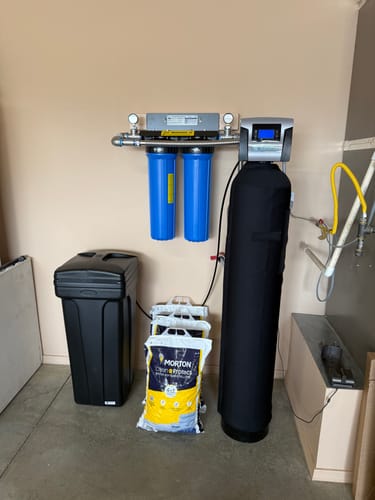
Size-wise, the system requires a 10" x 54" tank, which fit perfectly in our utility room next to the water heater. The control valve is programmable for backwash frequency based on water usage and quality, which meant I could optimize performance for our specific conditions.
Cost analysis showed this system hitting the sweet spot between effectiveness and value. Whole house RO would cost 3x more upfront plus ongoing membrane replacements. Point-of-use solutions would require multiple units throughout the house. This single system addressed everything at once.
Installation Experience and First Impressions

The system arrived in excellent condition, packaged better than I expected. Everything was individually wrapped and protected. Opening the main tank, I could immediately see the quality - thick fiberglass construction, professional-grade control valve, and clear, detailed installation materials.
I opted for professional installation through a local plumber who had experience with SoftPro systems. The installation took about 4 hours, including cutting into the main line, installing bypass valves, running a drain line for backwash, and programming the control head.
The most challenging part was finding the optimal location.
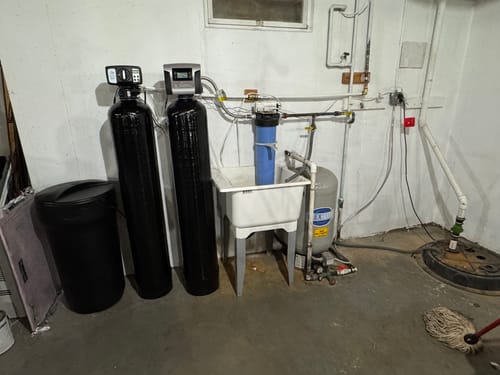
We needed access to the main water line before it split to different parts of the house, adequate clearance for the tank height, access to a drain for backwash cycles, and electrical power for the control valve. My utility room worked perfectly, but we had to rearrange some storage.
Initial startup was straightforward. The system automatically began its first backwash cycle to settle the media and remove any fines. I was impressed by how quiet the operation was - you could barely hear it running unless you were standing right next to it.
The control valve display shows cycles remaining, current time, and system status. Programming was intuitive once I read through the manual. I set it for backwash every 7 days initially, planning to adjust based on actual usage patterns.
Performance Testing and Real-World Results
The difference was noticeable within hours of installation, but I wanted hard data to confirm what I was experiencing.
Chlorine elimination was immediate and complete. Using test strips, incoming water showed 2.5 ppm total chlorine, while post-filter samples consistently read zero. The swimming pool smell disappeared entirely, and water from every faucet in the house tasted clean and neutral.
Fluoride reduction exceeded my expectations.
Pre-filter tests showed 0.8 ppm fluoride (typical for Austin municipal water), while post-filter tests averaged 0.2 ppm - approximately 75% reduction. This brought our levels down to what I consider reasonable while not completely eliminating trace amounts.
Flow rate testing showed no noticeable pressure drop during normal usage. Even running two showers simultaneously while the dishwasher filled, pressure remained strong throughout the house. The 8 GPM rating proved accurate for our needs.
TDS levels remained relatively stable, dropping from 180 ppm to about 160 ppm. This confirmed that the system removes targeted contaminants without stripping beneficial minerals, unlike reverse osmosis which removes everything.
After three months, I retested everything to check for performance consistency. Results remained virtually identical, indicating the media bed was performing as designed without significant degradation.
Daily Living Impact and Family Benefits
The improvements extended far beyond just better-tasting water, affecting our daily routines in ways I hadn't fully anticipated.
Shower experiences improved dramatically. My wife noticed softer skin and hair within the first week. The chlorine that was drying out skin and hair was completely gone. Our teenage daughter, who has sensitive skin, stopped complaining about irritation after bathing.
Coffee and cooking transformed completely.
Our morning coffee went from tasting flat and chemical-tinged to having the full flavor profile we expected from good beans. Cooking with the filtered water made everything taste cleaner - soups, pasta water, even ice cubes from our refrigerator.
Houseplant health improved noticeably. Plants that had been yellowing and struggling began showing new growth within a month. Our herb garden, which we water from the hose, started thriving again.
Appliance performance stayed consistent, but I expect long-term benefits. Without chlorine constantly running through our water heater, dishwasher, and washing machine, I'm anticipating extended equipment life and better efficiency over time.
Guests consistently comment on water quality now. Instead of apologizing for the chlorine taste, we actually get compliments on how clean and fresh everything tastes.
Operational Costs and Maintenance Reality
Understanding the true cost of ownership was crucial for my decision, and after six months, I have real data on what this system actually costs to operate.
Electricity consumption is minimal - the control valve uses approximately 8 watts during operation and minimal standby power. This translates to roughly $3-5 per month in electrical costs, barely noticeable on our utility bill.
Water usage for backwash cycles was my biggest unknown.
Each backwash uses approximately 100-120 gallons and runs for about 45 minutes every seven days. At Austin's water rates, this costs roughly $15-20 per month. I initially worried this was excessive, but considering we eliminated bottled water purchases (saving $40 monthly), the net cost is actually positive.
Media replacement represents the major long-term expense. The bone char and catalytic carbon blend should last 3-5 years depending on water quality and usage. Replacement cost is approximately $400-500, which works out to $100-150 annually.
No additional consumables are needed - no salt, chemicals, or regular filter cartridges. The system is essentially maintenance-free between media replacements, unlike some alternatives requiring monthly attention.
Comparing total ownership costs to bottled water, point-of-use filters throughout the house, or ongoing skin care products to combat chlorine damage, this system pays for itself within the first year while providing superior results.
Final Assessment and Recommendation
After six months of daily use, I can confidently say this system delivers on its promises and has genuinely improved our household water quality and daily living experience.
The combination of catalytic carbon and bone char effectively addresses both chlorine and fluoride - the two main concerns I had with Austin's municipal water. Performance has remained consistent, maintenance has been minimal, and the quality of life improvements extend beyond what I initially expected.
Would I make the same choice again?
Absolutely. The upfront investment felt significant, but the daily benefits and long-term value make it one of the better home improvements we've made.
This system is ideal for households dealing with municipal water that's technically safe but contains chlorine, chloramines, or fluoride at levels you'd prefer to reduce. If you're sensitive to chlorine, concerned about fluoride intake, or simply want better-tasting water throughout your entire home, this addresses all those issues effectively.
The SoftPro Fluoride & Chlorine SUPER Filter isn't the cheapest option available, but it's engineered specifically for comprehensive contaminant removal using proven, natural media. For families prioritizing water quality and willing to invest in a long-term solution, it delivers exceptional results.
Installation requires professional plumbing work and adequate space, so factor those considerations into your planning. But if your situation allows for it, the transformation in daily water quality makes this system worth every penny.