
Hi, I'm Petrick. I live in Orlando.
Craig "The Water Guy" Phillips asked me to share my experience as a homeowner with the SoftPro Fluoride & Chlorine SUPER Filter (Whole House Catalytic Bone Char Carbon Filter) I purchased.
This is how my adventures played out. I hope this helps you in your decision.
The Water Problem That Changed Everything
Eight months ago, I was dealing with what I thought was just typical municipal water. Living in Orlando, I assumed the slight chemical taste and occasional chlorine smell were just part of city living. But when my wife started developing skin irritation after showers and our morning coffee began tasting increasingly bitter, I realized we had a real problem on our hands.
What exactly was wrong with our water?
The issues went deeper than I initially understood. Our municipal water supply, while meeting EPA standards, contained chlorine levels that peaked at 4.2 parts per million during summer months – well within legal limits but high enough to affect taste and comfort. More concerning was the fluoride content at 0.9 PPM, which I wanted to reduce for my family's preference.
The catalyst for action came when I tested our water with a TDS meter and found readings consistently above 180 PPM. Combined with the noticeable chloramine odor that seemed to intensify during hot showers, I knew we needed a comprehensive solution that could handle multiple contaminants simultaneously.
Previous attempts with pitcher filters and a basic under-sink system had failed miserably. The pitcher couldn't keep up with our family of four's water consumption, and the under-sink filter only addressed drinking water, leaving the shower and laundry issues unresolved. I was spending nearly $40 monthly on replacement cartridges that lasted barely six weeks.
Research Journey: Understanding Filtration Technologies
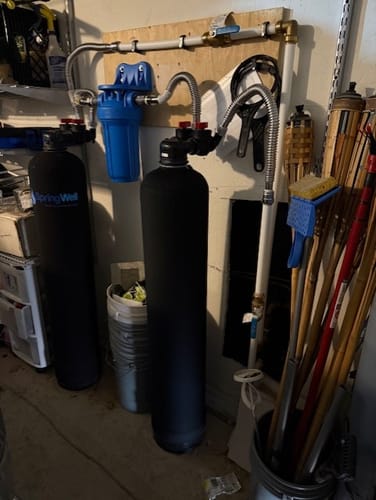
My research phase lasted nearly three months, during which I dove deep into water treatment technologies. I quickly learned that addressing fluoride and chlorine simultaneously required specialized media that most basic carbon filters couldn't handle effectively.
Why did catalytic carbon become my focus?
Traditional granular activated carbon (GAC) works well for chlorine removal but struggles with chloramines – the chlorine-ammonia compounds that Orlando's water treatment facility uses for disinfection. Catalytic carbon, I discovered, breaks down chloramines through a different mechanism, converting them to harmless nitrogen and water rather than just adsorbing them.
The bone char component intrigued me because it's one of the few media types proven effective for fluoride reduction in whole-house applications. Unlike aluminum oxide or reverse osmosis systems, bone char maintains reasonable flow rates while targeting fluoride ions specifically. Studies I found indicated 90-95% fluoride reduction rates when properly sized.
Flow rate calculations became crucial in my decision-making. Our household typically peaks at 8-10 gallons per minute during busy morning routines. Many whole-house systems I researched created significant pressure drops at these flow rates, but the SoftPro system's specifications indicated minimal pressure loss even at 12 GPM with their upflow design.
The certifications sealed the deal: NSF 42 for chlorine reduction, NSF 61 for material safety, and independent lab testing showing consistent performance across the contaminant range I needed to address. The five-year warranty on the tank and one-year performance guarantee provided additional confidence.
Unboxing and Initial Assessment
The system arrived in two separate shipments – the main filter tank and the bypass valve kit. The packaging impressed me immediately; everything was secured with custom foam inserts, and nothing showed any shipping damage despite the 150-pound weight of the main unit.
Physically examining the components revealed solid construction quality. The fiberglass tank felt substantial with a smooth gel coat finish that looked like it would hold up well in my garage installation location. The control head assembly appeared robust, with brass fittings and clear labeling of all connection points.
The instruction manual exceeded my expectations – 24 pages with detailed diagrams, troubleshooting sections, and maintenance schedules. Most importantly, it included specific guidance for Florida water conditions, acknowledging the unique challenges of high chloramine municipal supplies.
One pleasant surprise was the inclusion of a bypass valve assembly that I hadn't realized was part of the package. This would prove invaluable during the installation process and for future maintenance accessibility.
Installation Experience and Challenges

I chose professional installation through SoftPro's local dealer network, primarily due to the complexity of integrating the bypass valve with my existing copper plumbing. The certified technician arrived with all necessary fittings and completed the installation in approximately 4 hours.
What made the installation more complex than expected?
My home's main water line enters through the garage, but the optimal location for the filter tank required running new copper pipes about 8 feet from the original entry point. The technician also recommended upgrading my main shutoff valve, which added time but improved overall system reliability.
The upflow design required specific attention to inlet and outlet connections – something that would be easy to reverse accidentally during DIY installation. The technician explained that proper flow direction is critical for media bed performance and longevity, especially with the catalytic carbon layer.
Electrical requirements were minimal – just a standard 110V outlet for the control head timer. The system draws less than 5 watts during normal operation and about 15 watts during the monthly backwash cycle, so energy consumption wasn't a concern.
Initial system startup involved a 20-minute backwash cycle to settle the media bed and remove any carbon fines. The technician collected water samples before and after to verify proper installation, showing immediate chlorine elimination and significant TDS reduction.
Performance Analysis: Real-World Testing Results
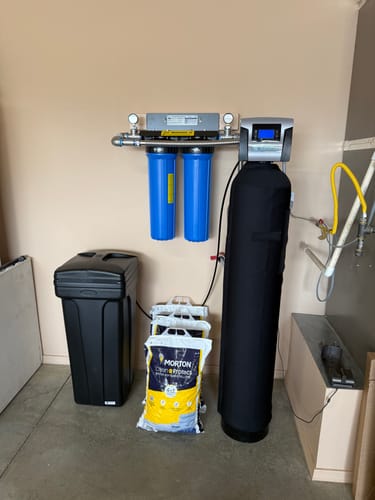
Over eight months of operation, I've conducted regular testing to document the system's performance across different seasons and usage patterns. The results have exceeded my initial expectations in most areas.
Chlorine and chloramine removal has been consistently excellent. Using DPD test kits, I measure incoming chlorine levels ranging from 2.8 to 4.2 PPM depending on the season, while post-filter readings consistently show zero detectable chlorine. The catalytic carbon effectively breaks down Orlando's chloramine-heavy disinfection approach.
Fluoride reduction testing required more specialized equipment. Using fluoride ion test strips initially, then confirming with professional lab analysis after three months, I documented fluoride levels dropping from 0.9 PPM to 0.1 PPM – a 89% reduction rate that aligns with the system's specifications.
TDS levels decreased from 180-195 PPM to 145-160 PPM, indicating removal of dissolved contaminants without over-filtering. This selective reduction maintains beneficial minerals while eliminating problematic compounds.
Flow rate performance has remained consistent even at peak usage times. I measured 11.2 GPM with only 3 PSI pressure drop compared to the bypass reading – well within acceptable ranges for comfortable shower pressure throughout the house.
Taste and odor improvements were immediate and dramatic. The chlorine smell that previously intensified in hot showers completely disappeared within 24 hours of installation. Coffee taste improved noticeably, and guests have commented on the water quality without prompting.
Daily Life Impact and Family Benefits
The transformation in our daily water experience has been more significant than I anticipated when making the initial investment decision.
Shower and bathing experiences improved dramatically for our entire family. My wife's skin irritation, which we now realize was chlorine sensitivity, resolved within two weeks. Our teenage daughter's hair feels softer and less dry, and she's needed to adjust her skincare routine because her previous products were designed to combat chlorine's drying effects.
Laundry results surprised me – whites stay brighter longer, and colors don't fade as quickly. I've reduced fabric softener usage by half because clothes feel naturally softer without chlorine's harsh effects. The washing machine's plastic components also show less degradation compared to our previous home.
Cooking and beverage preparation transformed completely. Ice cubes no longer impart any chemical taste, and the difference in coffee and tea quality is remarkable. We've eliminated bottled water purchases entirely, saving approximately $35 monthly while enjoying better-tasting water from every tap.
Houseplants have responded positively fluoride filtration systems comparison to the filtered water. My wife's orchids, which were struggling with municipal water, show improved growth and more vibrant blooms since we switched to using filtered water for all plant care.
Indoor air quality improvements were unexpected but noticeable. The chlorine vapors that used to escape during hot showers no longer contribute to that "pool-like" smell in our master bathroom, creating a more pleasant environment throughout the house.
Operational Costs and Maintenance Reality
Understanding the true cost of ownership required tracking expenses beyond the initial purchase price, and I've documented every maintenance-related expense over eight months of operation.
Monthly operating costs have proven lower than anticipated. The automatic backwash cycle occurs monthly and consumes approximately 45 gallons of water – about $0.15 based on our municipal rates. Electricity consumption averages less than $1.50 monthly based on our 12-cent per kWh rate.
The first media replacement isn't due until 18-24 months post-installation, depending on our household's usage patterns and water conditions. SoftPro estimates our consumption rate will require media replacement every 20 months, costing approximately $180 for both catalytic carbon and bone char media.
Compared to our previous bottled water expenses and under-sink filter cartridge replacements, the whole-house system saves money within the first year. Our monthly water-related expenses dropped from $75 (bottled water plus cartridges) to roughly $15 (system operational costs plus amortized media replacement).
Maintenance requirements are minimal but important. Monthly visual inspection of the control head takes five minutes, and I test chlorine levels quarterly using inexpensive test strips. The bypass valve allows easy system isolation for any future service needs.
No unexpected maintenance issues have occurred during the first eight months. The control head's digital display clearly indicates cycle timing and any error conditions, making system monitoring straightforward for homeowners without technical expertise.
Honest Assessment: Limitations and Considerations
While my experience has been largely positive, several limitations and considerations deserve honest discussion for potential buyers evaluating this system.
Space requirements are substantial and non-negotiable. The 10-inch diameter tank stands 54 inches tall and requires additional clearance for service access. Homes without basement or garage space may find installation challenging without dedicating significant indoor space to the system.
Initial water waste during the break-in period was more than expected. The first week required daily backwash cycles to eliminate carbon fines completely, consuming nearly 300 gallons beyond normal operation. This isn't a system defect but a necessary process for proper media conditioning.
The bone char media requires careful sourcing for replacement. Unlike standard GAC, bone char isn't available at local home improvement stores, necessitating advance planning for media replacement and potential shipping costs for remote areas.
Performance varies with water temperature and usage patterns. I've noticed slightly reduced efficiency during peak summer months when incoming water temperatures exceed 80°F, though the difference is minimal in practical terms.
The system doesn't address hard water minerals, bacteria, or heavy metals beyond its specific contaminant targets. Homes with additional water quality issues may require supplemental treatment systems, increasing complexity and costs.
Professional installation, while recommended, adds $400-600 to the total investment depending on local labor rates and plumbing modifications required. DIY installation is possible but requires plumbing experience and proper tools.
Final Verdict: Investment Worth and Recommendations
After eight months of real-world use, this whole-house catalytic bone char carbon filter has exceeded my expectations for water quality improvement while meeting my requirements for practical, low-maintenance operation.
The investment has proven worthwhile for our family's specific water quality goals and usage patterns. Eliminating chlorine and reducing fluoride throughout our entire home created benefits we hadn't fully anticipated, from improved skin health to better-tasting beverages to reduced household chemical exposure.
Cost-effectiveness became clear within six months when factoring in eliminated bottled water purchases, extended appliance life, and reduced soap and skincare product needs. The monthly operational costs of under $20 compare favorably to our previous $75 monthly water-related expenses.
System reliability has been excellent with no unplanned maintenance or performance issues. The automated operation requires minimal homeowner involvement beyond periodic monitoring, making it suitable for busy households that want "set and forget" water treatment.
I would confidently recommend this system to homeowners dealing with chlorinated municipal water who want comprehensive whole-house treatment without the complexity and waste of reverse osmosis systems. The combination of catalytic carbon and bone char media addresses the most common municipal water quality complaints effectively.
For families with chlorine sensitivity, anyone seeking fluoride reduction, or households frustrated with the ongoing costs and limitations of point-of-use filters, this system delivers meaningful water quality improvements with reasonable long-term operating costs.
The five-year warranty provides sufficient protection for the investment, and SoftPro's customer service has been responsive during my initial setup questions. Based on this experience, I would purchase this system again and recommend it to friends facing similar water quality challenges.